
How to Check Criminal History in Pennsylvania
No single search contains every Pennsylvania criminal record. PATCH returns a name-based Pennsylvania State Police repository response. The Unified Judicial System portal shows public docket history. A county Clerk of Courts holds the filed complaint, orders, plea papers, and certified case documents. County booking offices and jails hold recent local custody data. PA DOC covers state-sentenced custody and state parole. Choose the channel by the fact needed, not by which tool appears first.
Good identifiers matter. Collect the correct legal name, aliases, date of birth, and any known docket number, Offense Tracking Number, or incident number. A name match alone does not prove identity. The Pennsylvania record process works best when the same event is checked across the repository, court, and source county.
- Run the official PSP PATCH request for a Pennsylvania repository response, or use SP 4-170 when reviewing your own full state record.
- Search UJS by name, docket number, OTN, police incident number, or SID when available. Check both the lower court and Common Pleas levels.
- Open the county directory for the Clerk of Courts, booking office, jail, sheriff, or police agency that created the source file.
- Compare dates, charge grades, docket numbers, and dispositions. Treat an Under Review PATCH status as a manual match check, not proof of a record.
- Request a certified county copy or use the appropriate fingerprint channel when an official process calls for it.
Note: PATCH, UJS, and county files answer different questions, so a clear search plan prevents false conclusions from a single result.
Three Pennsylvania Criminal Record Systems
PATCH, UJS, and county clerks are connected, but they are not copies of one database. PATCH is identity-linked dissemination from the PSP Central Repository. UJS is a public view of case events and outcomes. The county Clerk of Courts is the documentary custodian for Common Pleas filings. A public UJS docket can show that a motion or order exists without offering the document itself for download.
The split explains many apparent gaps. A new county disposition may appear on UJS before PSP receives or matches it. A PATCH No Record certificate means the submitted identifiers produced no disseminable information under that product. It does not rule out a federal event, a public county docket, a limited record, or an event indexed under different identifiers. The practical answer is to compare systems, then ask the source county for the filed record.
The Pennsylvania Criminal History Repository
The Pennsylvania State Police Central Repository collects arrest, fingerprint, charge, disposition, sentence, corrections, and supervision data sent by police, courts, corrections agencies, and probation or parole offices. PSP links those reports through fingerprints and identifiers such as the OTN and SID. The repository is central, but the facts still originate throughout Pennsylvania. The Pennsylvania State Police criminal history agency profile details each official product and the correction process.
PATCH is the public name-based channel. It is not the subject's complete Access and Review report and does not add federal or out-of-state data. An ordinary request uses name and date of birth, with optional identifiers that may improve matching. SP 4-170 is the mail route for a person to obtain the broader Pennsylvania record held about that person.
| PATCH Field | Required | Use |
|---|---|---|
| First and last name | Yes | Core name comparison |
| Date of birth | Yes | Core identity match |
| Middle name and suffix | No | Helps narrow similar names |
| SSN | No | Nine-digit optional match aid |
| Sex and race | No | Optional matching details |
| Maiden names and aliases | No | Supports additional name checks |
How Pennsylvania Criminal Records Flow
A Pennsylvania criminal history entry begins outside the repository. Police create the incident and arrest event. A county or regional booking site records intake data and biometrics. For qualifying felony and misdemeanor arrests, fingerprints must reach PSP within 48 hours under 18 Pa.C.S. § 9112. The case usually starts in a Magisterial District Court or a municipal court. Charges held for court then move to the county Court of Common Pleas.
The next flow is just as important: Arrest → Booking → Fingerprints → Lower Court → Common Pleas Disposition → PSP Rap Sheet. Courts and other reporting bodies generally transmit specified dispositions within 90 days under § 9113. Pennsylvania uses more than 200 digital booking sites with Livescan and the Commonwealth Photo Imaging Network. Missing prints, delays, name variants, and unmatched identifiers can break the chain.
If a PSP segment looks wrong, first verify the UJS entry and secure the certified county outcome. Then request SP 4-170 and challenge the exact PSP segment. If the court docket itself is wrong, use the UJS correction form with the filing court. Pennsylvania law gives the subject formal review, challenge, and appeal rights. Source-first correction is more reliable than sending the same paper to every agency.
Statewide Record Systems in Pennsylvania
Pennsylvania operates distinct statewide public systems for criminal history, court dockets, state custody, and registry notice. Each has a defined scope. None replaces the original county file. The Pennsylvania Megan's Law Public Website is a statutory notification product, not a full court record. The PA DOC locator covers state custody and DOC supervision, not ordinary county jail populations.
| System | What It Holds | Run By |
|---|---|---|
| PATCH | Disseminable Pennsylvania repository history | Pennsylvania State Police |
| UJS Public Web Docket Sheets | Public appellate, Common Pleas, MDJ, and municipal docket data | Unified Judicial System |
| Inmate/Parolee Locator | State inmates and DOC-supervised people | PA DOC |
| Megan's Law Public Website | Active public registration profiles | PSP Megan's Law Section |
The official Pennsylvania active-registration report is the source for the registry's changing statewide tally. Registry status still must be read apart from a court disposition or PATCH response.
Pennsylvania Custody Record Searches
Custody searches divide into county, state, and federal layers. County jails hold most people awaiting trial and many local sentences. Pennsylvania Department of Corrections facilities hold state-sentenced inmates, while the locator also covers department-supervised people. Federal Bureau of Prisons custody sits outside both. A transfer can create a short delay between the local roster and the state locator.
The PA DOC report library publishes official Pennsylvania prison statistics and system reports.
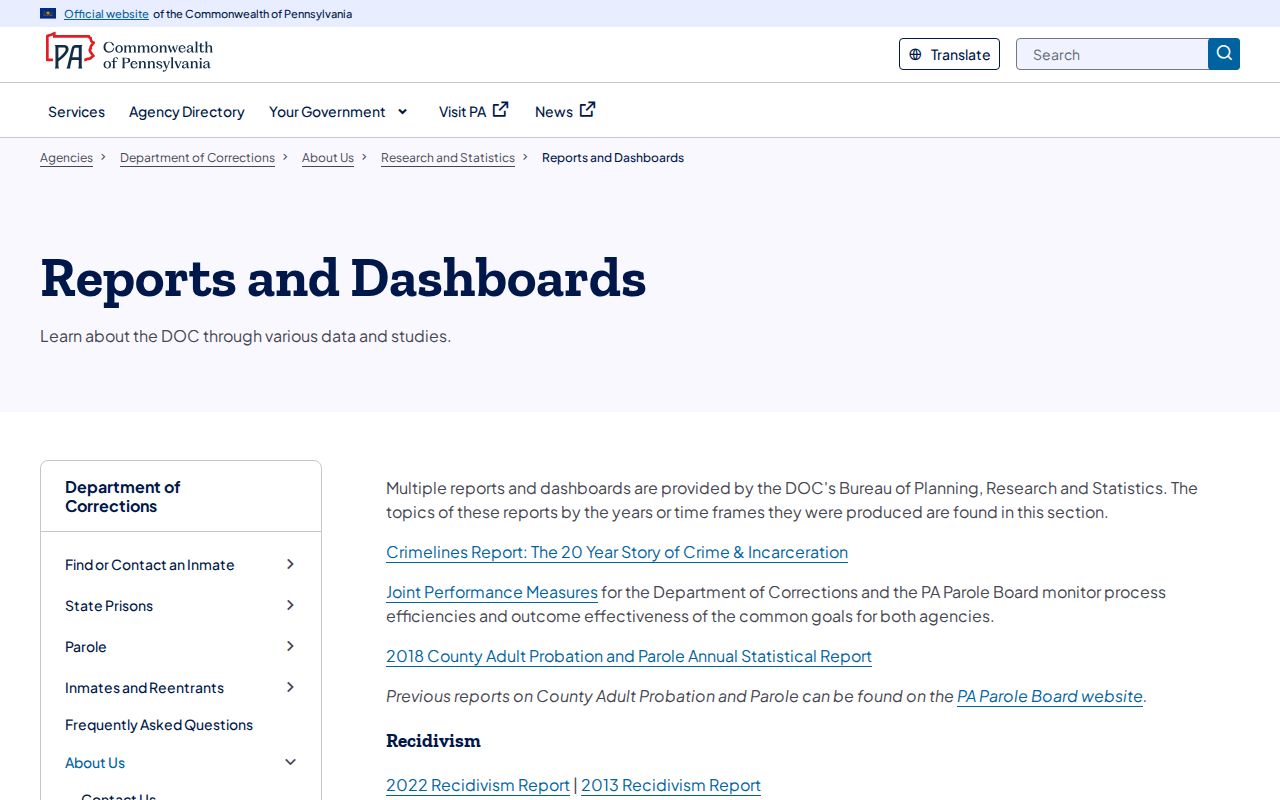
Those reports supply statewide context, while an individual custody search belongs in the correct county, state, or federal locator.
PA SAVIN and VINELink add custody notifications for participating Pennsylvania county, state-prison, and parole records.
Notifications supplement the official locator and source agency; they do not turn a custody event into a full criminal history.
For federal confinement, the Federal Bureau of Prisons inmate locator is the official search route.
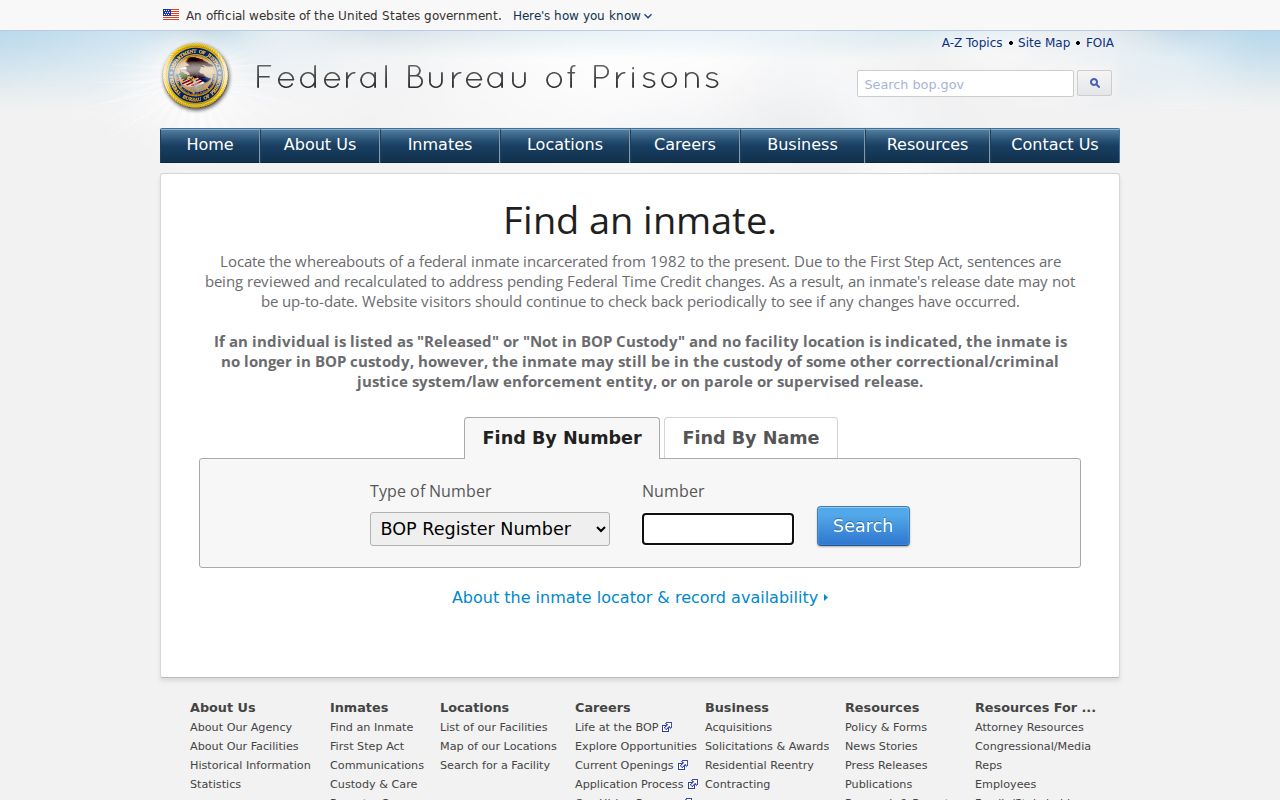
The federal locator covers BOP records from 1982 forward and does not replace Pennsylvania court or PSP records.
Note: The PA DOC locator updates daily but excludes ordinary county custody, so recent bookings must be checked through the county layer.
Types of Criminal Records
Pennsylvania records describe different stages of one event. Arrest and booking files record intake and initial allegations. A docket tracks the case process. The PSP rap sheet compiles reportable cycles across counties. A warrant is a court or justice-system order, while custody and supervision files answer where a person is held or monitored. Registry data serves public notice under a separate statute.
- Arrest and booking records: created by police and county or regional booking offices, with qualifying fingerprints sent to PSP.
- Pennsylvania criminal court cases: public docket events appear in UJS, while filed documents remain with the county court.
- Repository rap sheets: PSP joins arrest cycles, formal charges, dispositions, sentences, and reported supervision data.
- Warrants: statewide justice networks exist, but Pennsylvania offers no general public statewide warrant database.
- Probation and parole: county offices generally supervise county sentences; the Parole Board decides state release and PA DOC performs state field supervision.
- Custody and registry records: county jails, PA DOC, BOP, and the PSP registry each cover a separate population.
Charge grade also matters. Pennsylvania abbreviates felony and misdemeanor levels as F1 through F3 and M1 through M3, plus summary offenses. A bare grade is not an outcome. Read it with the charge-level disposition and sentence in UJS or the certified court file.
Pennsylvania Police Reports and Warrants
PATCH is not a police-report archive. PSP keeps trooper investigations, while municipal, campus, transit, sheriff, and other agencies keep their own files. Pennsylvania's Right-to-Know Law can leave a full criminal investigation exempt even after closure. A narrow request for blotter facts, a filed complaint, or a releasable part is often more precise than asking for everything tied to an event.
The PSP crash report search uses a separate approval and ordering path.
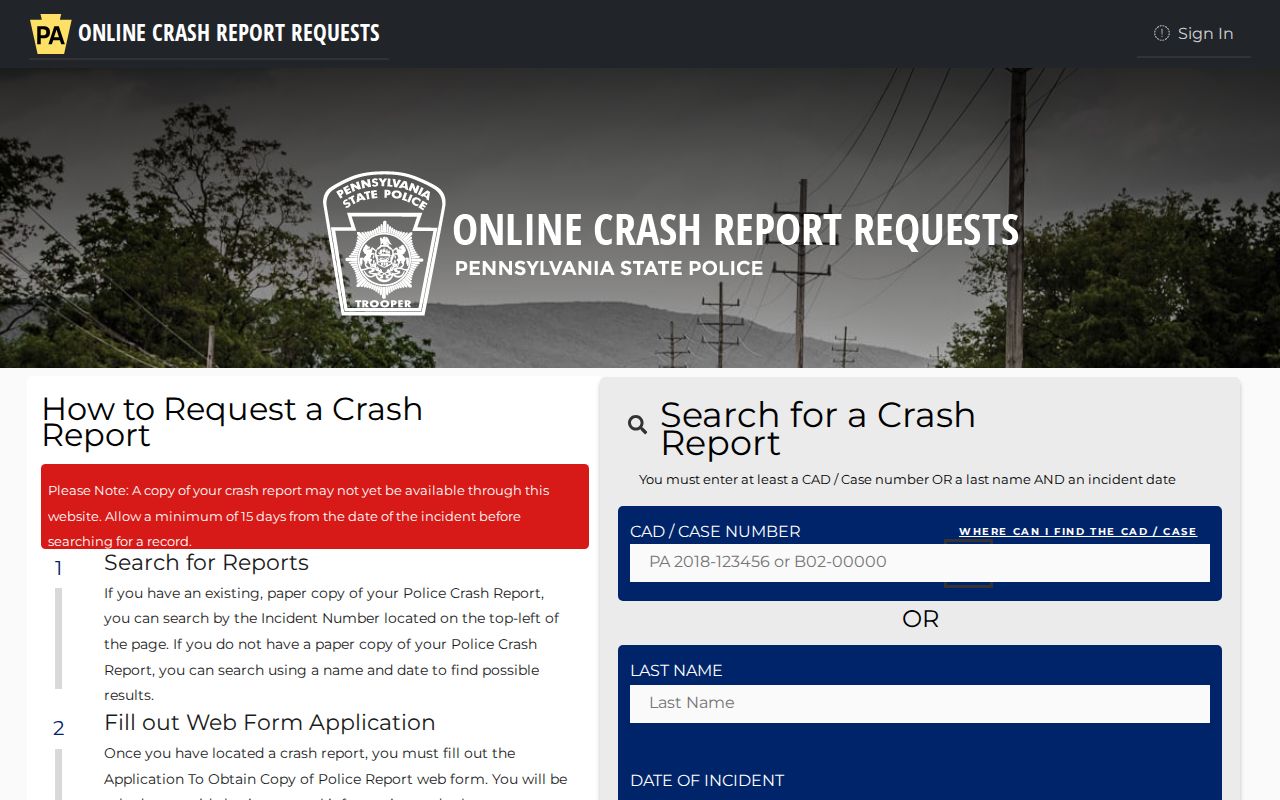
That interface searches PSP-investigated crashes by a case identifier or by name and incident date, not general criminal incidents.
Pennsylvania also has restricted statewide warrant tools in UJS, JNET, and CLEAN, but no general public statewide warrant search. Public users can review the UJS docket, then contact the issuing lower court, county Clerk of Courts, sheriff, or police warrant unit. Absence from a public screen does not prove that no warrant exists.
State parole status is another distinct channel. The Pennsylvania state parole absconder search covers a defined DOC-supervised population.
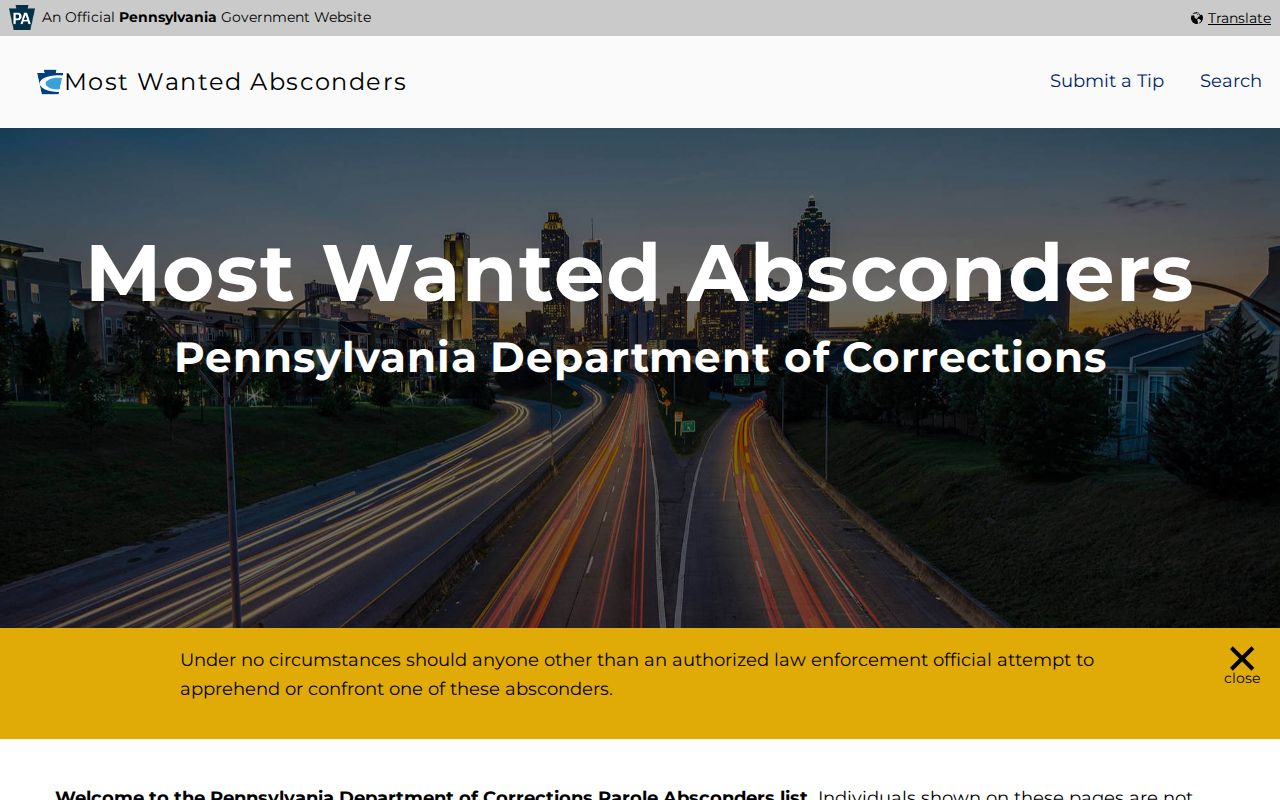
An absconder listing is not a general Pennsylvania warrant index and should be read with the official supervision record.
Pennsylvania Expungement and Limited Access
Expungement and limited access do different work. Expungement removes identifying traces from public criminal history subject to statutory exceptions. Limited access restricts dissemination while the official record remains. Pennsylvania's Clean Slate process can place qualifying nonconvictions, summaries, and certain misdemeanors under automatic limited access. Petition paths cover other qualifying records and require filing in the Court of Common Pleas with jurisdiction over the case.
Begin with the $20 SP 4-170 Access and Review report, then compare it with UJS and the county file. A statewide petition fee is $132 plus local costs, though an in forma pauperis form may address inability to pay. After relief, verify that the county order reached PSP and that the public UJS result changed as required. Public records described in 18 Pa.C.S. § 9104 are not always erased everywhere by one repository action.
The Pennsylvania clemency application is the official pardon route for convictions that may not fit ordinary relief.
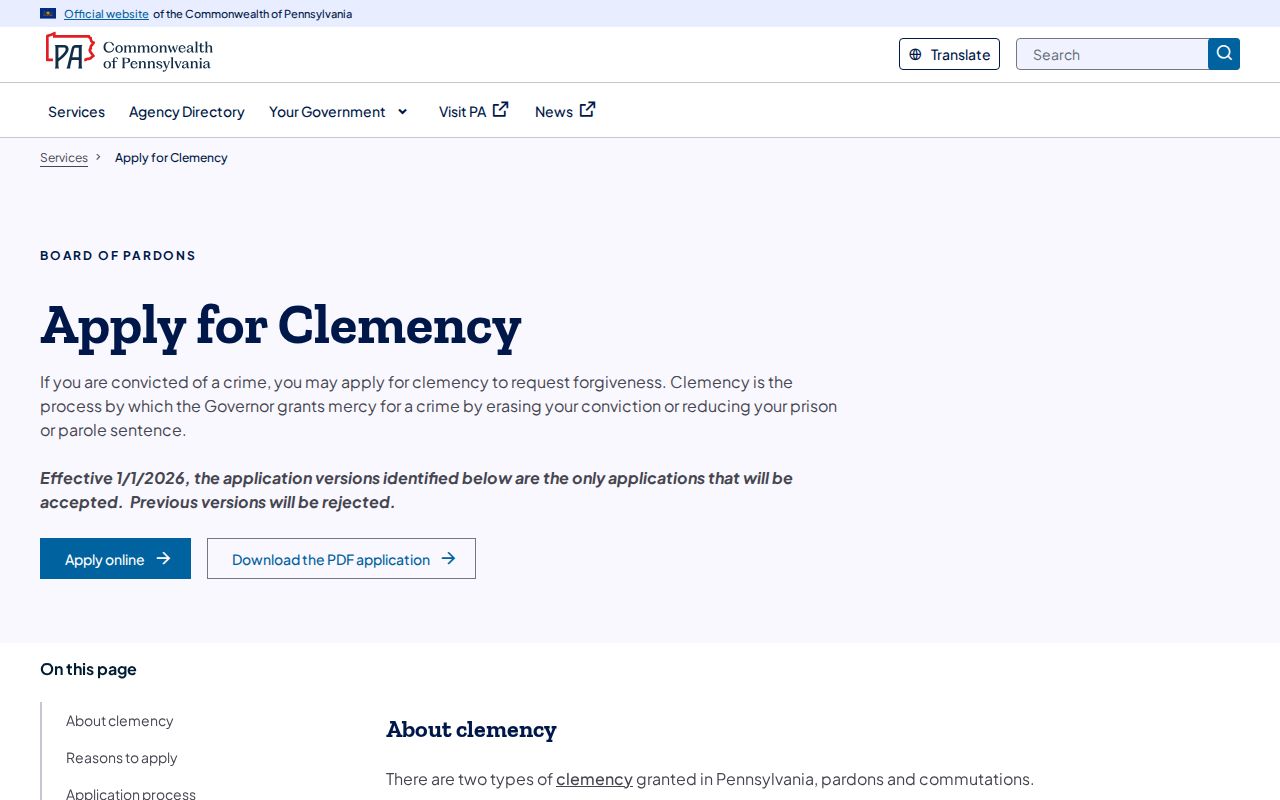
A gubernatorial pardon now starts an automatic expungement-processing chain through the Board of Pardons, AOPC, county court, and PSP.
Pennsylvania Criminal Record Fees
Fees depend on the product. The ordinary PATCH response and the subject's own Access and Review report are separate purchases with different scope and timing. UJS docket searching is free. County copies and certification can add local costs. Fingerprint services require the correct program or federal route, and Pennsylvania does not publish one universal IdentoGO price.
| Official Channel | Fee | What It Answers |
|---|---|---|
| PATCH or SP 4-164 | $22 | Ordinary Pennsylvania repository response |
| Notarized SP 4-164 | $27 | Mail-only notarized Pennsylvania result |
| SP 4-170 | $20 | Subject's complete Pennsylvania review |
| UJS docket | Free | Public court history |
| FBI Identity History Summary | $18 plus capture | Subject's federal fingerprint history |
| Expungement or limited-access petition | $132 plus local costs | County court relief filing |
The official Pennsylvania public-record fee structure sets limits for common Right-to-Know Law copying and certification charges.
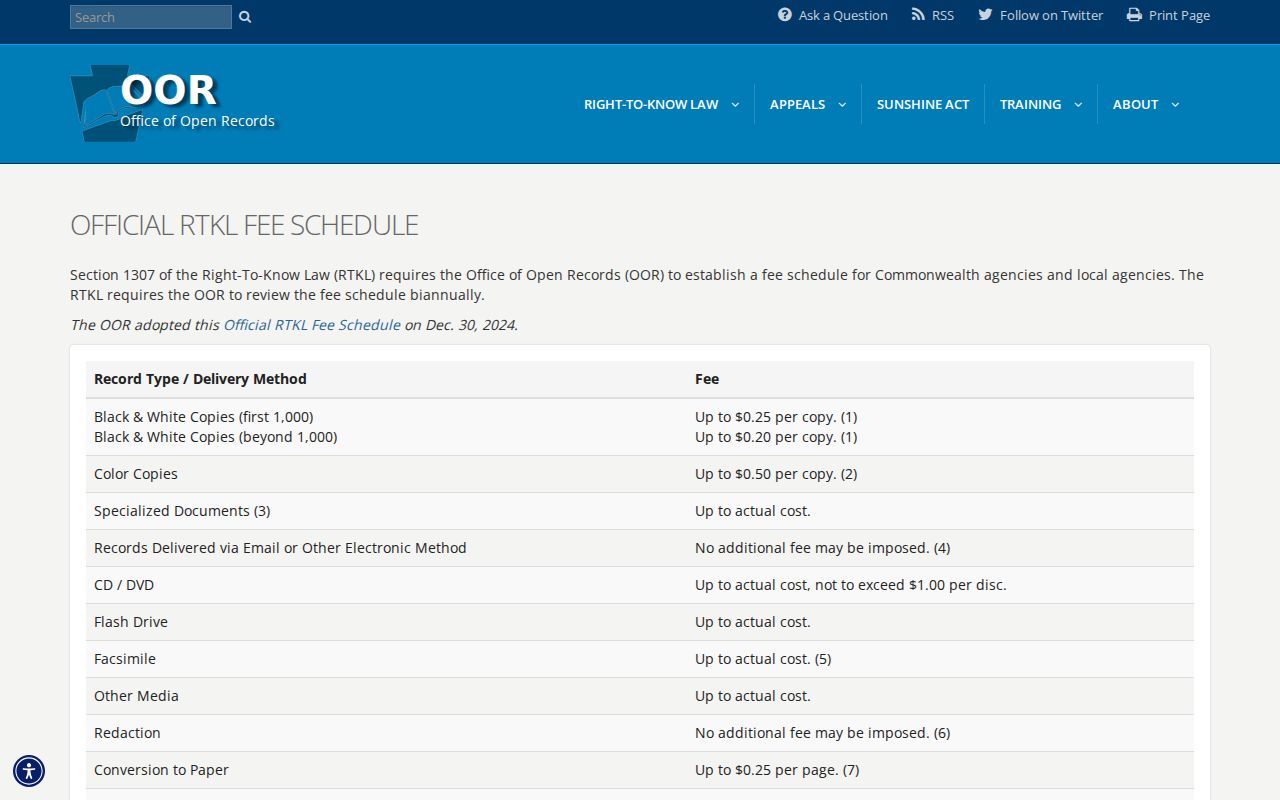
RTKL fees do not replace court-specific copy charges or the fixed PSP product fees listed above.
Note: Confirm the current charge with the office holding the record because county certification, service, and archive costs can vary.
Public Access Laws
The Pennsylvania Right-to-Know Law presumes many agency records public unless an exemption, privilege, or other law applies. Criminal records require more care. CHRIA defines criminal history record information and separates it from intelligence, investigation, and treatment data. Courts follow the UJS electronic-record policy rather than ordinary executive-agency RTKL procedure. Police blotter facts may be public while the related investigative narrative remains withheld.
The Pennsylvania Right-to-Know Law citizen guide explains how to send a request to an agency Open Records Officer.
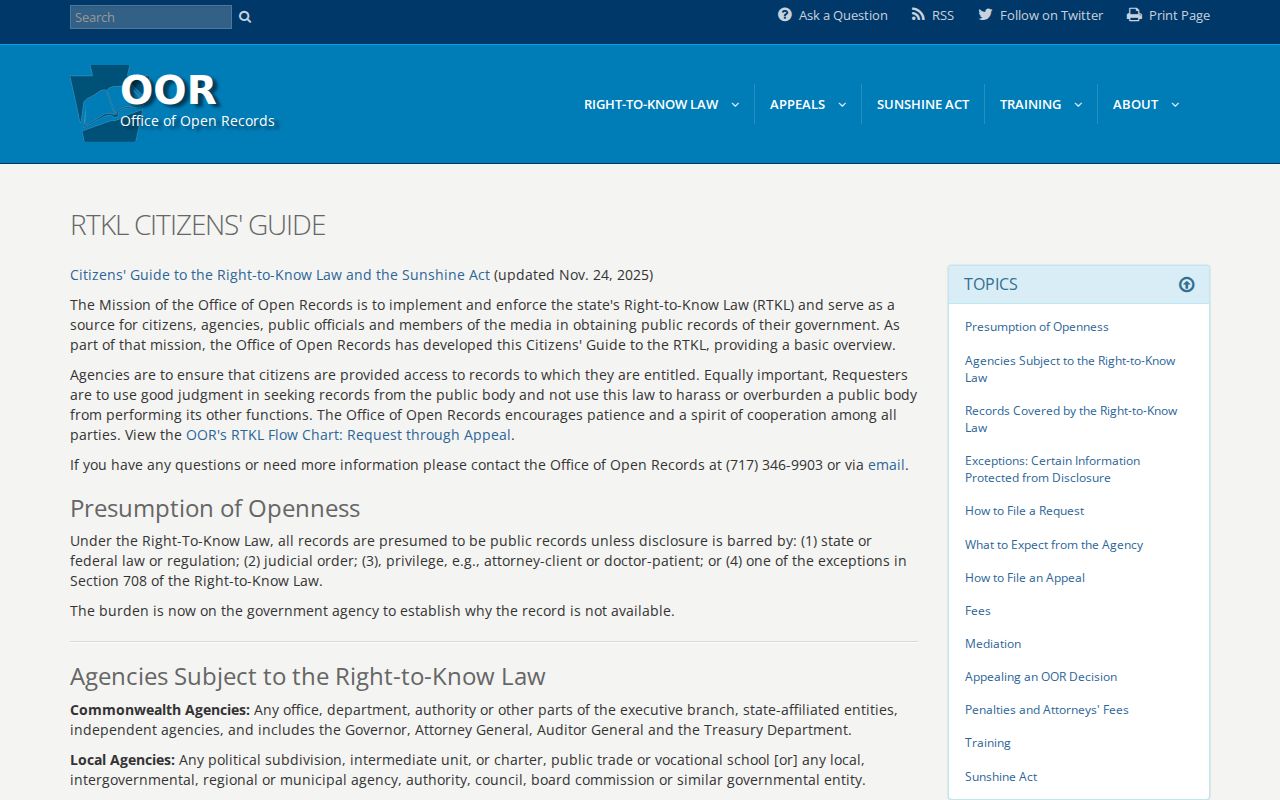
The request must go to the agency that holds the record; the Office of Open Records handles many appeals but is not the source archive.
Key Pennsylvania laws:
Right-to-Know Law §§ 301-305, 703, 708, 901-902 sets agency access rules and the criminal-investigation exemption.
18 Pa.C.S. Chapter 91 defines CHRI, repository duties, expungement, limited access, and correction rights.
18 Pa.C.S. § 9121 governs PSP dissemination and excludes specified limited or stale entries.
UJS Electronic Case Record Policy controls court redactions, exclusions, corrections, and written requests.
Federal Records Beyond Pennsylvania
A Pennsylvania repository search does not include federal cases or a national fingerprint history. PACER is the official account-based system for federal district, appellate, and bankruptcy cases. The FBI's electronic Departmental Order route gives a person access to that person's own Identity History Summary. BOP provides the federal custody locator. These channels answer separate questions and should not be described as an expanded PATCH result.
The PACER federal records service is the official court-search entry point.
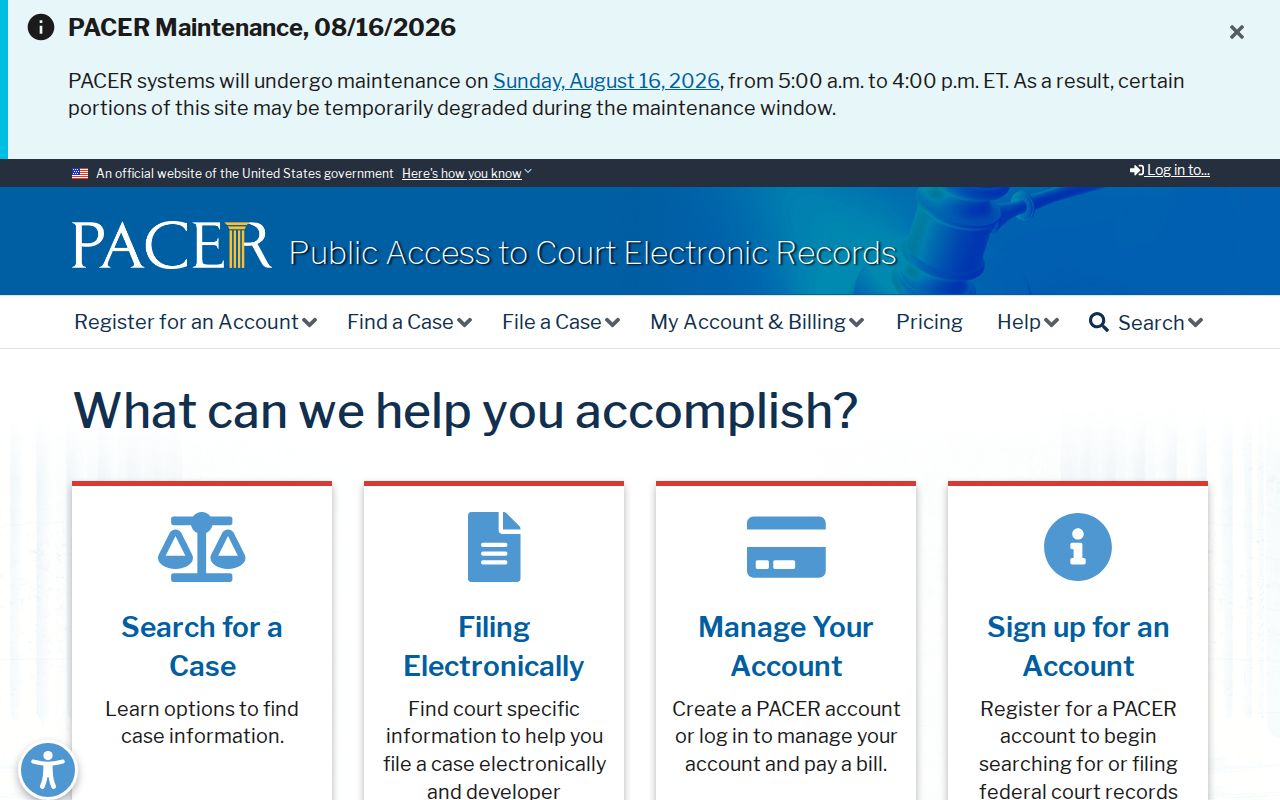
PACER may list a federal case tied to Pennsylvania, but it does not supply the state repository certificate or county criminal file.
Reading Pennsylvania Criminal Records
Pennsylvania records use short codes that can look final when they are not. Read each term in context. An arrest is an accusation stage. A disposition is the charge-level outcome. A docket can contain several charges with different results, and a supervision event can follow the judgment without changing the original verdict.
- OTN
- The Offense Tracking Number links a police arrest cycle with lower court, Common Pleas, and repository reporting.
- Disposition
- The result of one charge, such as dismissal, acquittal, nolle prosequi, guilty plea, or conviction.
- Limited access
- A restriction on public dissemination that leaves the official record in place.
- ARD
- Accelerated Rehabilitative Disposition, a pretrial program that may lead to dismissal and expungement after completion.
- SID
- A fingerprint-linked State Identification Number that can be a UJS search key but is not displayed on public dockets.
A current docket can still disagree with a PSP record because the county outcome has not reached or matched the repository. Compare identifiers first. Then correct the system where the error began.
Find Criminal Records by County in Pennsylvania
Arrests, bookings, police reports, and full case files are created locally. Pennsylvania's largest counties each maintain their own court, custody, sheriff, and probation channels even when a statewide portal shows part of the event. Start with the county where the arrest or filing occurred. Every one of Pennsylvania's 67 counties has a local criminal records site.
Philadelphia County
Philadelphia · Largest county, with municipal and Common Pleas court routes
Allegheny County
Pittsburgh · Western Pennsylvania's largest county and a high-volume docket
Montgomery County
Norristown · Large suburban county with separate court and custody channels
Bucks County
Doylestown · County case, booking, and repository records remain distinct
Delaware County
Media · Densely populated southeastern judicial district
Lancaster County
Lancaster · High-volume south-central local records route
Chester County
West Chester · Fast-growing southeastern judicial district
York County
York · Separate court, prison, sheriff, and probation systems
Browse the full directory of all 67 Pennsylvania counties to open the criminal records site for any county.