
Arrest History in Pennsylvania
Municipal and regional police, Pennsylvania State Police troopers, county sheriffs, county detectives, campus or transit police, and other authorized officers can create Pennsylvania arrest records. Each source agency keeps its own incident material. A county or regional booking operation can add the intake time, booking number, physical description, charges, bail data, fingerprints, palmprints, and photographs. The public version may contain far less. Police blotter facts, a county roster, and a court docket are separate records even when they arise from the same arrest.
PSP acts as the identity-linkage and dissemination center for the Pennsylvania Central Repository. Fingerprint-supported arrest events, later charge outcomes, and sentence or supervision data can become part of a statewide file. Yet PSP did not create every field. Courts, corrections offices, and probation or parole sources report their own events. A new arrest can appear in a local booking record or lower-court docket before the statewide Pennsylvania arrest history catches up.
PAUCRS Pennsylvania Arrest Statistics
The PAUCRS Arrest Distribution report is a statistics tool, not a person search. It can group reported Pennsylvania arrest events by agency, municipality, offense, age, ethnicity, gender, race, resident status, arrest type, arrestee disposition, or weapon. More than 1,000 agencies contribute voluntarily. That participation limit matters. A PAUCRS total is not a complete roster of every arrest, and a count of arrest events is not a count of unique people or convictions.
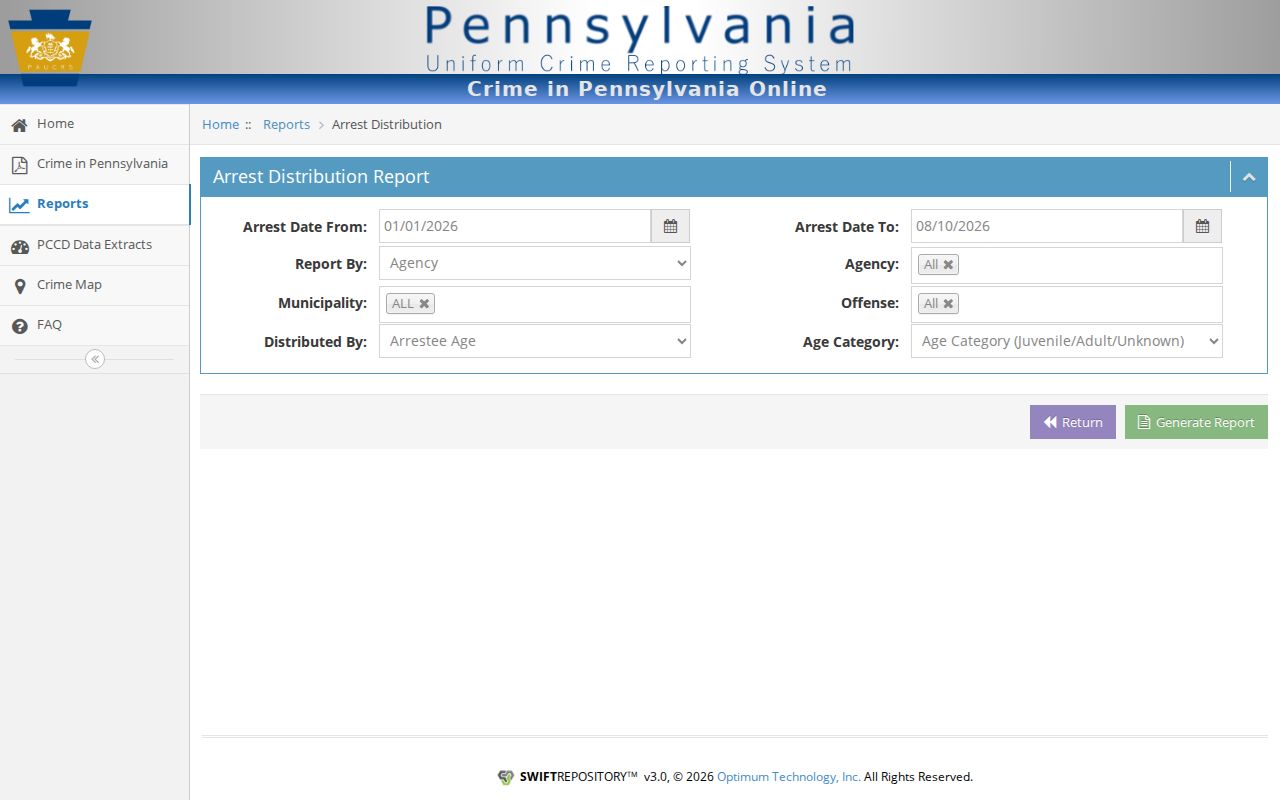
The dashboard is useful for statewide patterns, while a name-based Pennsylvania arrest lookup belongs in county, court, or repository systems.
| PAUCRS Field | Control | What It Does |
|---|---|---|
| Arrest Date From/To | Date range | Limits events by a valid chronological span |
| Report By | Dropdown | Groups Pennsylvania results by reporting agency |
| Agencies | Searchable multiselect | Uses all or selected participating agencies |
| Municipalities | Multiselect | Adds an optional local geographic filter |
| Offense | Searchable multiselect | Selects broad NIBRS groups or individual offenses |
| Distributed By | Dropdown | Breaks counts down by demographic or arrest characteristic |
PSP reported 62,582 arrests tied to its own 2024 operations. That is not an all-agency Pennsylvania total. It must stay labeled as PSP activity because city, county, campus, and other agencies make arrests beyond that scope.
How Arrests Become Part of a Pennsylvania Record
A qualifying Pennsylvania felony or misdemeanor arrest triggers a fingerprint-reporting chain. More than 200 digital booking facilities use Livescan and the Commonwealth Photo Imaging Network. Pennsylvania law directs qualifying prints to PSP's Central Repository within 48 hours. The biometric submission links the person to the arrest more reliably than a name alone. It can include demographics, fingerprints, palmprints, photographs, and charge identifiers. CPIN, CLEAN, and related justice networks are restricted systems. They are not public mugshot or arrest-search products.
Data flow: Arrest › Booking › Fingerprint Submission › Pennsylvania State Police Central Repository Entry
The court later reports the charge outcome. Pennsylvania law assigns up to 90 days for specified disposition reporting by covered courts and agencies. A missing print, reporting lag, name variation, or identifier mismatch can leave a gap. No current official statewide disposition-completeness percentage was found, so a precise completion rate would be misleading. Compare the repository event with the lower-court and Common Pleas dockets instead.
Pennsylvania Livescan Fingerprint Compliance
The Pennsylvania fingerprint-compliance dashboards track the county and state work behind the arrest-to-repository link.
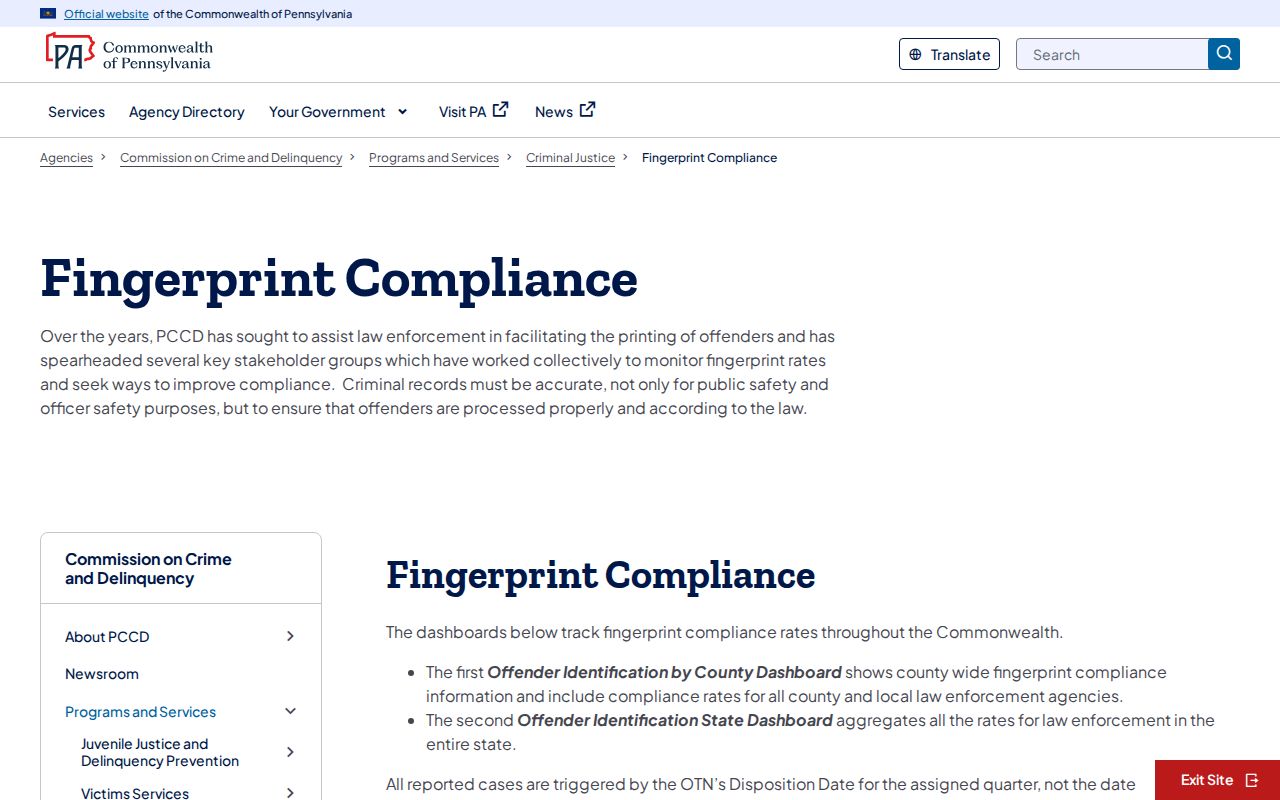
The compliance view helps explain why fingerprint capture is a system requirement, not just an intake detail.
Section 9112 also reaches special paths. A qualifying case that starts by summons can result in court-directed fingerprinting. Specified retail-theft matters and a private complaint ending in conviction can produce the same duty. Completed prints still follow the 48-hour forwarding deadline. This is different from a preliminary-arraignment deadline. Pennsylvania uses prompt or without-unnecessary-delay language for that appearance and does not create a universal 24-hour arrest rule.
How to Look Up Pennsylvania Arrests
A thorough Pennsylvania arrest lookup follows the record from its newest source to its final outcome. The freshest booking detail usually sits at the county level. UJS supplies public case chronology. PATCH supplies an ordinary PSP repository product, while SP 4-170 is the mail route for reviewing one's own full Pennsylvania record. PA DOC becomes relevant after a state commitment or for state parole supervision. Each channel has a defined gap, so no single no-result should end the search.
- Identify the arresting agency, likely county, date range, and any incident, booking, docket, or OTN number.
- Check the source blotter or public information release and the county jail roster. A PSP Public Information Release is online for only 30 days.
- Use the directory of all 67 Pennsylvania counties for current booking records, jail custody, and the local office that created the event.
- Search UJS at both the lower-court and Common Pleas levels to learn which charges were filed and how each count ended.
- Use PATCH for its statewide disseminable product or SP 4-170 to inspect and challenge one's own full Pennsylvania history.
- Check the PA DOC locator only for state custody or state parole, then send a narrow request to the source agency for missing public material.
A written agency request should name the date range, location, incident number, and exact public component sought. Pennsylvania's Right-to-Know Law can protect criminal investigative reports, notes, sources, victims, video, and material that affects prosecution or safety. A request for blotter facts or a releasable administrative portion is more precise than a demand for everything.
No Pennsylvania Mugshot Database
Pennsylvania has no public statewide mugshot search. Booking photographs may exist in a restricted CPIN record or a local custody file, but existence does not make every image a public statewide record. Section 9104 recognizes contemporaneous police blotters, court dockets, and public releases as public categories. The Right-to-Know Law's criminal-investigation exemption can still protect related records. Juvenile law-enforcement information is generally segregated under state juvenile law.
The Pennsylvania central-booking program overview describes Livescan and CPIN as justice-system tools.
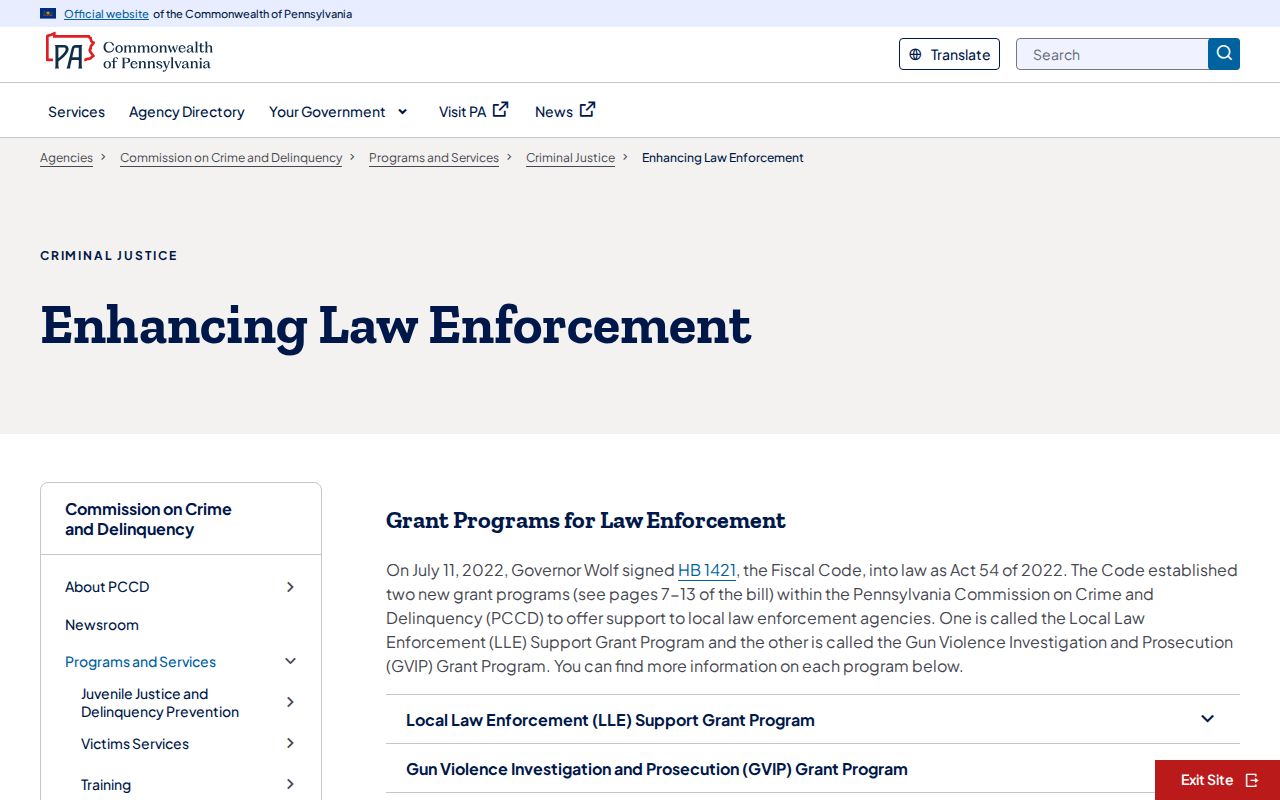
The statewide infrastructure supports identification and reporting, while public release remains tied to the proper source and access law.
What an Arrest Record Shows
A Pennsylvania arrest record can describe the intake event in detail, but the public version depends on the source. A booking package may hold more data than a blotter, jail roster, or PATCH result reveals. The initial charge can change after review. Bail and current custody can also change quickly. Read the arrest fields as a snapshot, then use the court docket for the legal result.
| Name & Identifiers | Name, aliases, birth data, physical descriptors, SID, OTN, and incident number where held or lawfully shown. |
|---|---|
| Arrest Event | Date, time, location, arrest type, arresting agency, and agency ORI. |
| Charges at Booking | Statute, description, grade, and initial offense list, which may later change in court. |
| Booking Data | Facility, intake time, booking number, fingerprints, palmprints, and photographs in the source system. |
| Bail & Arraignment | Initial bail, preliminary appearance, release, or custody status where reported. |
| Missing Outcome | An arrest entry alone does not establish dismissal, plea, acquittal, conviction, or sentence. |
Who Creates Pennsylvania Arrest History
Agency type points to the likely source. Municipal or regional police keep their incident record and send a filed complaint into the court chain. PSP has statewide jurisdiction, patrols highways, and serves municipalities without full local police coverage. County sheriffs handle warrants, transport, courthouse duties, and local functions that differ by county. District attorneys and county detectives support county investigations. Campus, transit, and special police work within statutory or geographic limits. Federal arrests follow federal court and custody systems rather than Pennsylvania's county path.
PSP reports service to 1,734 municipalities, about 82% of Pennsylvania land area, 61% of highway miles, and 26% of the population. Those figures show broad reach, but they do not make PSP the source for every Pennsylvania arrest. Start with the agency named on the blotter, booking record, or UJS docket. A narrowly framed request should go to that agency's records officer. If a complaint has been filed, the court docket can preserve the procedural trail even after a short-lived public release disappears.
Arrests vs Convictions
An arrest records an accusation and custody or charging event. A conviction is a court judgment after a guilty verdict or accepted guilty or no-contest plea. Pennsylvania public access and repository rules treat these records differently. An arrest can end in dismissal, acquittal, diversion, nolle prosequi, or conviction. That is why the count-level disposition, not the booking label, answers how the case ended.
| Point | Arrest Record | Conviction Record |
|---|---|---|
| Created by | Arresting agency and booking operation | Court judgment reported through the Pennsylvania system |
| What it proves | An arrest, citation, or booked accusation occurred | Guilt was established by plea or verdict and judgment |
| Best source | Source blotter, county roster, incident record, and repository as applicable | UJS docket, county court file, and PSP history as applicable |
| Public limits | Investigative, juvenile, stale no-disposition, and limited records may be withheld | Expunged, Clean Slate, limited-access, or otherwise protected records are restricted |
| Relief | Some nonconvictions and qualifying events may be expunged | Conviction relief has narrower statutory routes, including limited access or pardon |
Note: A Pennsylvania arrest entry without a disposition is not proof of guilt; check both court levels and the filing county.
Pennsylvania Arrests and State Custody
County jails hold most people awaiting trial and many local sentences. Those facilities keep separate rosters and are outside PA DOC's operational control. A newly sentenced person may remain visible only at the county level while transfer data catches up. PA DOC reported 22 state correctional institutions and 39,396 inmates at the end of 2024, but its locator is not a statewide county-jail search.
The live Pennsylvania inmate and parolee locator covers state-sentenced custody and department-supervised people.
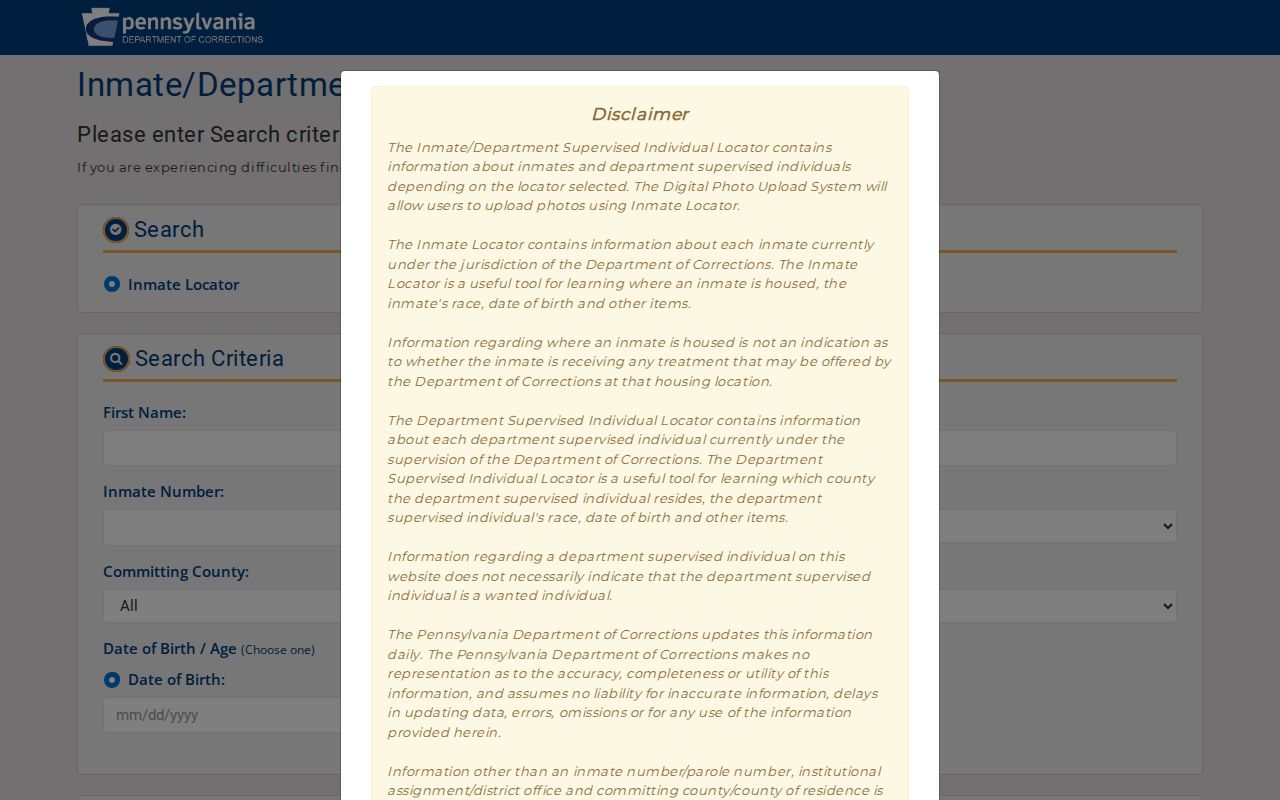
Search by last name or inmate number first, then use committing county, location, birth data, or other filters to narrow a result.
The PA DOC locator service description explains its coverage and exclusions.
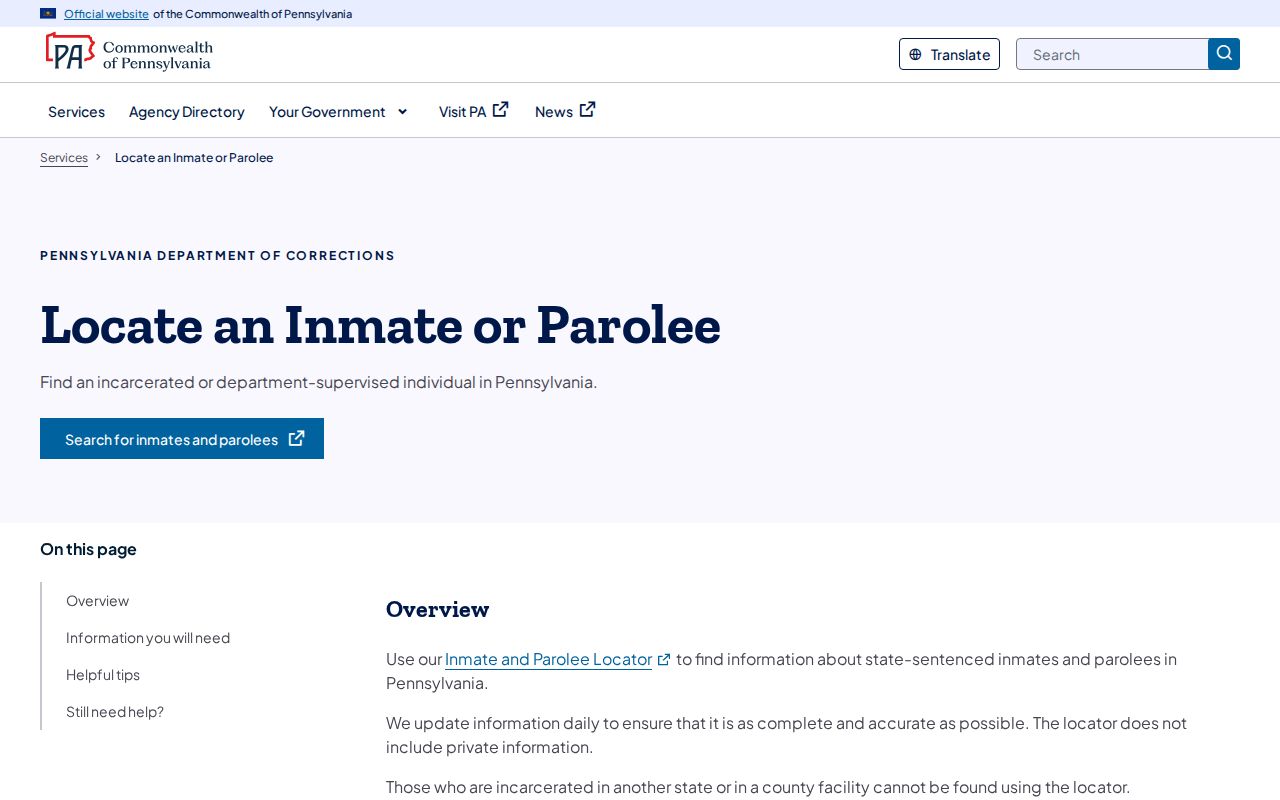
The locator updates daily, excludes ordinary county custody, and does not replace UJS for a full charge or sentence ledger.
The broader Pennsylvania UCR dashboard supplies official aggregate crime and arrest reporting.
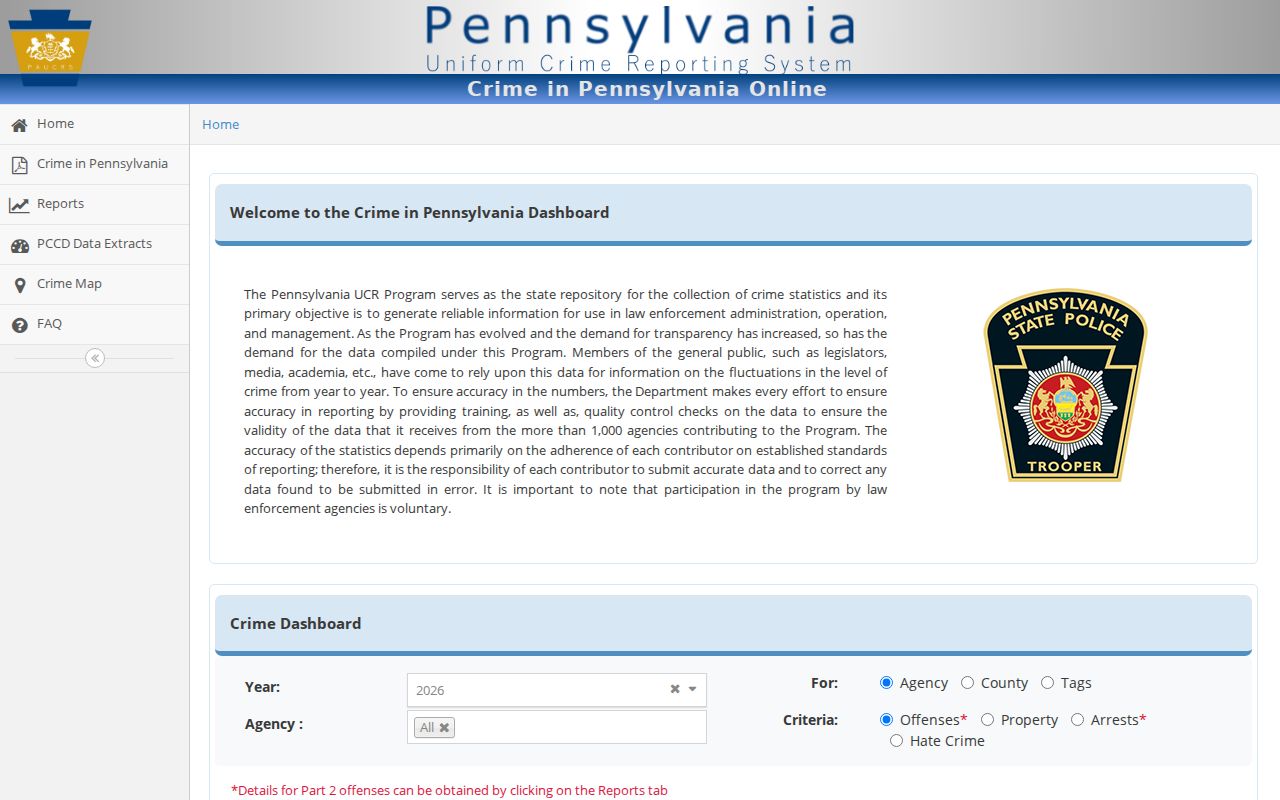
Aggregate statistics and custody locators answer different questions, so neither should be read as a complete personal arrest history.